Nurturing Young Minds: The Profound Impact of Art, Dance & Music at East Point School, Ichhapur
Estimated reading time: 7 minutes
Key Takeaways:
- Arts (Art, Dance, Music) are indispensable for holistic child development, moving beyond ‘extra-curricular’ status to a core pedagogical necessity supported by neuroscience and NEP 2020.
- Engagement in arts significantly boosts neurocognitive functions like working memory, inhibitory control, and cognitive flexibility, critical for academic and life success.
- Arts education fosters profound emotional growth, social-emotional learning (SEL), and essential 21st-century skills such as creativity, critical thinking, collaboration, and communication.
- East Point School, Ichhapur, champions this philosophy through state-of-the-art facilities, diverse arts programs, and signature events like the Eastopia Fest, ensuring comprehensive cultural and character building.
- The school is committed to providing this enriching, arts-integrated, and future-ready CBSE education at an affordable cost, making quality learning accessible to families across West Bengal.
Table of Contents
- Nurturing Young Minds: The Profound Impact of Art, Dance & Music at East Point School, Ichhapur
- The Neuroscience Behind Creativity: Why Arts Are Not Just ‘Extra’
- Beyond Academics: The Multifaceted Benefits of Arts for Children
- Cultivating Character & Culture: East Point School’s Unique Approach
- Addressing Modern Needs: Inclusion and Future-Ready Skills
- Affordable Excellence: A Promise Kept
- Practical Takeaways for Parents: Nurturing Creativity at Home and Choosing the Right School
- Frequently Asked Questions (FAQ)
As parents, we dream of a future where our children are not just academically proficient but also compassionate, creative, and resilient individuals, ready to navigate an ever-changing world. In this pursuit, we often focus on textbooks and test scores, inadvertently overlooking a profound catalyst for true holistic development: the transformative power of art, dance, and music. At East Point School, Ichhapur, we understand this deeply. Our philosophy is rooted in the belief that an education truly nurtures young minds when it harmonizes intellectual rigor with vibrant creative expression.
This isn’t just about fostering hobbies; it’s about integrating essential elements that significantly impact neurocognitive development, social-emotional learning, and the acquisition of critical 21st-century skills. From Ichhapur to Shyamnagar, Barrackpore, and Kolkata, parents seeking a comprehensive and forward-thinking education are increasingly recognizing the indispensable role of the performing arts in schools.
The Neuroscience Behind Creativity: Why Arts Are Not Just ‘Extra’
For too long, arts have been viewed as an ‘add-on’ or an ‘extra-curricular’ activity, something secondary to core academic subjects. However, contemporary research, combined with the National Education Policy (NEP 2020), unequivocally establishes the arts as a core pedagogical necessity for holistic development. The CBSE board’s emphasis on Art-Integrated Learning (AIL) is a testament to this paradigm shift.
At East Point School, we embrace this scientific understanding. Studies show that engaging with music, dance, and visual arts significantly enhances neurocognitive functions. Children involved in these activities often exhibit superior executive functions – the very skills critical for success in all aspects of life. This includes:
- Working Memory: The ability to hold and manipulate information in the mind, crucial for problem-solving and comprehension.
- Inhibitory Control: The capacity to manage impulses and stay focused, leading to better classroom behavior and attention spans.
- Cognitive Flexibility: The skill to adapt to new situations, switch perspectives, and think creatively to find solutions.
Furthermore, arts engagement fosters neuroplasticity, the brain’s ability to reorganize itself by forming new neural connections. This makes the brain more adaptable and efficient. Arts education also improves “Theory of Mind”—the ability to understand and attribute mental states (beliefs, intents, desires, emotions) to oneself and others—a cornerstone of empathy and social intelligence. For a CBSE School in Ichhapur committed to preparing students for a complex world, these cognitive advantages are invaluable.
Beyond Academics: The Multifaceted Benefits of Arts for Children
The impact of art, dance, and music extends far beyond the development of cognitive skills. They are powerful conduits for emotional growth through arts, character building education, and the cultivation of crucial 21st-century skills for children.
- Emotional Intelligence and Resilience: Through creative expression, children learn to identify, understand, and articulate their emotions in a safe and constructive environment. Dance allows for physical manifestation of feelings, music provides a language beyond words, and art offers a visual outlet. This process builds emotional resilience, self-awareness, and the ability to cope with challenges. Performing in front of an audience, for instance, teaches courage, perseverance, and how to handle both success and constructive feedback.
- Social-Emotional Learning (SEL): Collaborative projects in music, dance, or drama require teamwork, negotiation, and mutual respect. Students learn to listen, compromise, lead, and follow. These experiences are fundamental to developing strong social skills, empathy, and effective communication, preparing them for future collaborations in any field.
- 21st-Century Skills: The modern world demands more than rote learning. It requires innovators, critical thinkers, and effective communicators. Arts education directly nurtures these skills:
- Creativity and Innovation: Arts inherently encourage divergent thinking, problem-solving, and the generation of new ideas.
- Critical Thinking: Analyzing a piece of music, interpreting a dance performance, or critiquing a painting sharpens analytical abilities.
- Collaboration and Communication: Group performances and art projects teach students to work effectively in teams and communicate their ideas clearly.
- Physical Wellness and Psychomotor Development: Dance and movement-based activities contribute significantly to physical wellness school initiatives. They enhance coordination, balance, flexibility, strength, and spatial awareness. Playing musical instruments refines fine motor skills, hand-eye coordination, and discipline. These psychomotor developments are crucial for overall physical health and can even improve academic performance by enhancing sensory processing.
Cultivating Character & Culture: East Point School’s Unique Approach
At East Point School, the commitment to arts and cultural education isn’t just about theory; it’s woven into the very fabric of our institution. Guided by the profound Nageshwar Foundation legacy and the visionary Dr. Arindam Kumar Bose leadership, we believe in providing an environment where every child can discover and hone their creative talents. This deep-seated commitment ensures that arts are not peripheral but central to our educational offering.
Our school boasts dedicated, state-of-the-art facilities designed to inspire creativity:
- Spacious Art Studios: Equipped with various mediums for visual arts, from painting and sculpting to digital art.
- Soundproof Music Rooms: Offering instruments ranging from traditional Indian classical to Western contemporary, with expert instructors.
- Dynamic Dance Halls: Providing ample space for various dance forms, including classical, folk, and contemporary.
These facilities come alive through a plethora of East Point School cultural activities and programs:
- Dedicated Arts Clubs: Students can join clubs focused on specific interests like Hindustani Classical Music, Western Choir, Folk Dance, Contemporary Dance, Dramatics, Visual Arts, and more. These clubs provide specialized training and platforms for regular practice and performance.
- Art-Integrated Projects (AIPs): In line with the NEP 2020 and CBSE guidelines, our curriculum integrates arts into academic subjects. For example, history lessons might involve dramatizing historical events, science concepts could be explained through visual models, or mathematical patterns explored through rhythm and music.
- Morning Assemblies: Beyond prayers and news, our assemblies often feature student performances, poetry recitations, and short cultural showcases, providing regular opportunities for expression and building confidence.
- Sahodaya Cluster Participation: East Point School actively participates in inter-school cultural competitions and events within the Sahodaya School Complex, exposing our students to a broader artistic community and fostering healthy competition.
- The Eastopia Fest: Our Annual Extravaganza: The highlight of our cultural calendar is the much-anticipated Eastopia Fest. This grand annual day production is more than just a school event; it’s a vibrant celebration of talent, culture, and collective effort. Students across all grades come together to showcase their skills in elaborate dance sequences, musical performances, theatrical productions, and art exhibitions. Eastopia Fest provides an unparalleled stage for every child to shine, build confidence, learn stagecraft, and appreciate the magic of collaborative creation. It embodies our commitment to nurturing talent and celebrating diversity.
Through these initiatives, we foster a deep appreciation for Indian Cultural Roots Education, ensuring our students are not only globally aware but also grounded in their rich heritage. The performing arts in schools, especially at East Point, become a living, breathing part of their daily learning.
Addressing Modern Needs: Inclusion and Future-Ready Skills
In today’s diverse classrooms, arts play a crucial role in inclusion. They offer alternative avenues for expression for students who might struggle with traditional academic learning, serving as effective tools for behavioral intervention and even language acquisition. A child learning a new language might find it easier to grasp through songs, rhymes, or role-playing.
Looking to the future, East Point School also embraces digital integration in the arts. Students explore digital art forms, learn music production software, and understand how technology can enhance performances. This prepares them not just for current artistic trends but also for potential AI-driven assessment of soft skills – skills that are inherently developed through the arts. We are preparing students not just for exams, but for life.
Affordable Excellence: A Promise Kept
We understand that quality education, especially one encompassing such a rich array of programs, can be a concern for parents. At East Point School, a core part of the Nageshwar Foundation’s vision and Dr. Arindam Kumar Bose’s leadership is to ensure that comprehensive, holistic education is accessible. We are proud to be an affordable CBSE School West Bengal, without compromising on the quality of our resources, facilities, or faculty. Our commitment is to provide affordable excellence, making sure that every child in Ichhapur, Shyamnagar, Barrackpore, and beyond has the opportunity to experience the profound impact of art, dance, and music in their formative years.
Practical Takeaways for Parents: Nurturing Creativity at Home and Choosing the Right School
As parents, you are your child’s first teachers and greatest cheerleaders. Here’s how you can continue to nurture their creative spirit and make informed choices:
- Encourage Free Exploration: Provide access to crayons, paper, simple musical instruments, or just open space for movement. Don’t worry about the outcome; focus on the process.
- Expose Them to Diverse Arts: Visit local art exhibitions, attend cultural events, listen to different genres of music, or watch dance performances together.
- Limit Screen Time, Encourage Play: Unstructured play is a powerful catalyst for imagination and creativity.
- Observe and Support: Pay attention to what your child gravitates towards – is it singing, drawing, dancing, or storytelling? Nurture that spark.
- Ask the Right Questions When Choosing a School:
- What dedicated facilities does the school have for art, dance, and music?
- How are arts integrated into the regular curriculum (Art-Integrated Learning)?
- What specific clubs or programs are available for performing and visual arts?
- Are there opportunities for students to perform or showcase their work annually? (Look for events like Eastopia Fest!)
- Does the school emphasize Holistic Development beyond academics?
Choosing a school is one of the most significant decisions you make for your child’s future. It’s about finding an environment that celebrates their unique potential, fosters their innate creativity, and equips them with the skills and character to thrive.
At East Point School, Ichhapur, we invite you to discover how our unwavering commitment to nurturing young minds through art, dance, and music creates not just intelligent students, but vibrant, empathetic, and truly well-rounded individuals. Experience the difference where every note, every step, and every stroke of genius contributes to a brighter future.
Ready to See the Difference?
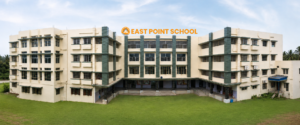
We understand that seeing is believing. We encourage you to experience our vibrant campus firsthand.
Take a Campus Tour to explore our dedicated art studios, music rooms, and dance halls, and learn more about our comprehensive programs. Discover why we are a leading choice for Admissions Ichhapur Schools and families across Ichhapur, Shyamnagar, Barrackpore, and Kolkata seeking affordable excellence in CBSE education.
Enquire Now to begin your child’s journey towards holistic development at East Point School.
Frequently Asked Questions (FAQ)
Q: Why are arts considered a ‘core’ necessity at East Point School, not just an ‘add-on’?
A: At East Point School, we align with NEP 2020 and contemporary research, which confirm that arts significantly impact neurocognitive development, social-emotional learning, and the acquisition of critical 21st-century skills. They are fundamental to holistic development, not merely extracurricular activities.
Q: How do arts contribute to a child’s cognitive development?
A: Engaging with art, dance, and music enhances executive functions such as working memory, inhibitory control, and cognitive flexibility. It also fosters neuroplasticity and improves “Theory of Mind,” crucial for problem-solving, focus, adaptability, and empathy.
Q: What 21st-century skills does arts education foster?
A: Arts education at East Point School directly nurtures creativity, innovation, critical thinking, collaboration, and communication skills. These are vital for students to thrive in a rapidly evolving modern world.
Q: What unique cultural activities and facilities does East Point School offer?
A: East Point School boasts state-of-the-art art studios, soundproof music rooms, and dynamic dance halls. We offer dedicated arts clubs, Art-Integrated Projects (AIPs), morning assembly showcases, Sahodaya Cluster participation, and our highlight event, the annual Eastopia Fest, which is a grand celebration of student talent and culture.
Q: Is quality arts-integrated education at East Point School affordable?
A: Yes. Driven by the Nageshwar Foundation’s vision and Dr. Arindam Kumar Bose’s leadership, East Point School is committed to providing comprehensive, arts-integrated CBSE education at an affordable cost, ensuring accessibility without compromising on quality for families in Ichhapur, Shyamnagar, Barrackpore, and beyond.
Pingback: Extracurricular Activities: How They Shape Student Personality